
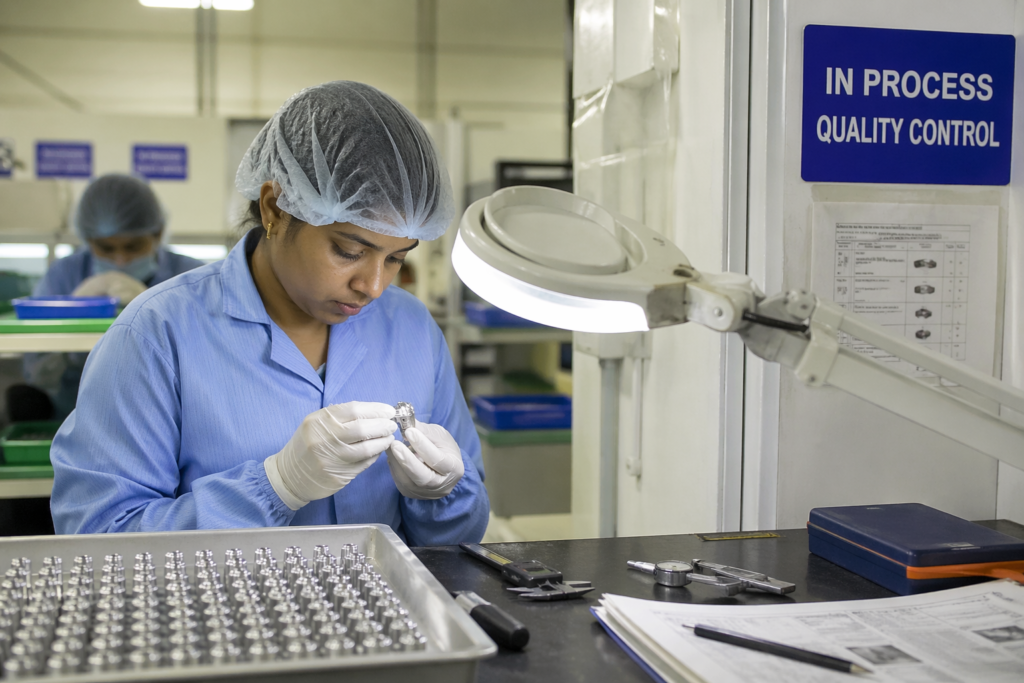
In Process Quality Control
In-Process Quality Control (IPQC) is a critical component of modern manufacturing that focuses on monitoring and controlling product quality during the production process—rather than waiting until the final stage. By conducting inspections and tests at various checkpoints on the production line, IPQC ensures that defects are identified early, processes remain consistent, and products meet predefined quality standards.
Unlike final inspection, which only evaluates finished goods, IPQC is proactive. It helps manufacturers detect deviations in real time, reduce waste, minimize rework, and maintain efficiency across operations. This approach is especially important in industries such as textiles, electronics, pharmaceuticals, and automotive manufacturing, where even minor inconsistencies can lead to significant quality issues.
IPQC typically involves checking raw materials, monitoring machine settings, verifying workmanship, and ensuring compliance with specifications throughout production. Trained quality inspectors use standardized procedures and sampling techniques to assess whether each stage meets required criteria.
By implementing a strong IPQC system, businesses can improve product reliability, enhance customer satisfaction, and strengthen their reputation in competitive global markets. Ultimately, IPQC is not just about defect detection—it’s about building quality into the process itself.
In Process Quality Control (IPQC)
Summarize this blog post with: ChatGPT | Perplexity | Claude | Grok
You already know that product quality can make or break your manufacturing business. But relying only on final inspection often means defects are discovered too late, leading to costly rework and shipment delays. In this guide, you’ll learn how In Process Quality Control (IPQC) works, why it is essential, and how you can implement or outsource it to ensure consistent production quality.
Key Takeaways
- In Process Quality Control (IPQC) ensures product quality is monitored during manufacturing, not just at the end.
- IPQC significantly reduces defects, rework costs, and production delays.
- Key methods include sampling inspections, statistical process control, and visual checks.
- Industries like textiles, electronics, and pharmaceuticals heavily depend on IPQC systems.
- A structured IPQC system improves efficiency, compliance, and product consistency.
- Outsourcing IPQC provides unbiased reporting and expert-level quality assurance.
- Choosing the right provider ensures stronger supply chain reliability and fewer risks.
What is In Process Quality Control in manufacturing?
In Process Quality Control (IPQC) is a manufacturing quality control process that monitors products during production to detect defects early and ensure compliance with specifications. It focuses on identifying and correcting issues while production is still ongoing rather than after completion.
For example, in a garment factory, IPQC inspectors check stitching quality, fabric defects, and measurements at different production stages instead of waiting until the final product is finished. This prevents mass defects and reduces wasted materials.
Moreover, IPQC is a critical part of modern quality control services in manufacturing because it ensures continuous monitoring instead of reactive inspection. As such, manufacturers gain real-time visibility into production quality.
Why is In Process Quality Control important for product quality?
In Process Quality Control is important because it helps manufacturers detect defects early, reduce production waste, and maintain consistent quality standards throughout the manufacturing cycle.
For instance, research shows that companies implementing in-process inspections reduce defect rates by up to 30–50% — Source: American Society for Quality, 2023. This demonstrates how early intervention directly improves output quality.
Additionally, IPQC supports compliance with international standards such as ISO 9001. In industries like apparel and electronics, even minor defects can lead to large financial losses.
Moreover, integrating IPQC into your workflow strengthens your supply chain quality management strategy by ensuring every production stage meets defined standards.
What are the key stages of In Process Quality Control?
In Process Quality Control stages are structured checkpoints that ensure quality is maintained from start to finish during manufacturing.
1. Pre-production quality checks
Pre-production checks are the first stage of IPQC where raw materials and production readiness are evaluated before manufacturing begins.
For example, in textile production, fabric color consistency and GSM (grams per square meter) are verified before cutting begins. This prevents downstream defects.
2. During production inspection
During production inspection is the core stage where products are checked while being manufactured on the production line.
For instance, inspectors monitor stitching consistency in garments or soldering quality in electronics assembly lines. This ensures defects are corrected immediately.
3. Inline inspection process
Inline inspection process refers to continuous monitoring of production output directly on the line to identify defects in real time.
For more structured systems, manufacturers often rely on an inline inspection process to maintain real-time quality control.
4. Final in-process verification
Final in-process verification ensures semi-finished goods meet specifications before moving to packaging or next production stages.
For example, checking garment measurements before finishing reduces rework at the end stage.
What methods are used in In Process Quality Control?
In Process Quality Control methods are systematic techniques used to detect, measure, and control defects during production.
Statistical Process Control (SPC)
Statistical Process Control is a data-driven method used to monitor production consistency using statistical analysis tools.
For example, SPC charts track defect trends in real time to identify process instability early. Studies show SPC reduces production variability by up to 40% — Source: Journal of Manufacturing Systems, 2022.
Sampling inspection
Sampling inspection is a quality method where a small percentage of products are tested instead of inspecting the entire batch.
For instance, inspecting 10 out of every 100 garments helps quickly detect recurring defects.
Visual inspection
Visual inspection is the most common IPQC method where trained inspectors identify visible defects such as scratches, misalignment, or stitching errors.
Quality checklists
Quality checklists ensure standardized inspection criteria across all production stages.
You can use a structured quality inspection checklist to maintain consistency across teams.
Which industries benefit most from IPQC services?
In Process Quality Control benefits industries where precision, consistency, and compliance are critical for product success.
Textile and garment industry
The textile industry relies heavily on IPQC to ensure fabric quality, stitching accuracy, and sizing consistency.
For example, garment inspection services use IPQC to reduce defect rates in export-oriented apparel production.
Electronics manufacturing
Electronics manufacturing uses IPQC to detect soldering issues, circuit defects, and component failures early.
Pharmaceutical industry
Pharmaceutical companies depend on IPQC to ensure dosage accuracy, contamination control, and regulatory compliance.
Automotive industry
Automotive manufacturers use IPQC to maintain safety standards and prevent mechanical failures during assembly.
How can businesses implement an effective IPQC system?
An effective In Process Quality Control system is implemented through structured planning, trained personnel, and continuous monitoring.
Step 1: Define quality standards
First, manufacturers must define clear quality benchmarks for materials, processes, and finished goods.
Step 2: Set inspection checkpoints
Second, establish inspection points at each production stage to ensure continuous monitoring.
Step 3: Train quality inspectors
Third, train inspectors to identify defects and use standardized procedures for evaluation.
Step 4: Use digital reporting tools
Fourth, implement software systems for real-time reporting and documentation of defects.
Step 5: Monitor and improve continuously
Finally, analyze inspection data to improve production efficiency and reduce recurring issues.
For deeper insights, explore our manufacturing quality assurance guide.
What are the benefits of outsourcing In Process Quality Control services?
Outsourcing In Process Quality Control services provides independent verification, cost efficiency, and expert-level inspection capabilities.
For example, third-party inspection companies reduce bias and ensure objective reporting of production quality issues. Studies show outsourced QA can reduce defect-related losses by up to 25% — Source: McKinsey Manufacturing Report, 2023.
Moreover, outsourcing allows companies to scale inspections across multiple factories without hiring internal teams.
This is why many brands rely on a third-party inspection company in Pakistan for consistent quality monitoring.
Additionally, outsourcing strengthens factory audit services and supply chain transparency.
How do you choose the right IPQC service provider?
A reliable In Process Quality Control provider should offer expertise, transparency, and real-time reporting systems.
Experience and industry expertise
Choose providers with proven experience in your industry, such as textiles or electronics.
Reporting transparency
Ensure they provide detailed inspection reports with images, data, and defect categorization.
Global compliance knowledge
The provider should understand international standards like ISO, AQL, and ASTM.
On-ground inspection network
A strong local presence ensures faster inspections and better communication with factories.
What is the difference between IPQC and final inspection?
In Process Quality Control differs from final inspection because IPQC monitors production continuously, while final inspection evaluates completed goods only.
| Feature | IPQC | Final Inspection |
|---|---|---|
| Timing | During production | After production |
| Purpose | Prevent defects early | Detect finished defects |
| Cost impact | Lowers rework cost | Higher risk of rework |
| Efficiency | High | Moderate |
| Risk level | Low | Higher |
For example, pre-shipment inspection services focus on finished goods, while IPQC prevents defects before shipment even becomes necessary.
Tools and practical applications of IPQC
In Process Quality Control tools include inspection instruments, software systems, and reporting dashboards used to track quality performance.
For example, calipers, micrometers, and digital scanners are used for precision measurement in manufacturing.
Moreover, modern factories use ERP-integrated systems to track defect trends and production efficiency in real time.
How to get started with IPQC services
In Process Quality Control implementation begins with assessing your production risks and identifying critical inspection points.
Next, you can either build an internal QA team or partner with experts offering inline inspection services for immediate scalability.
Finally, integrate IPQC into your broader supply chain quality management system to ensure long-term production consistency and reduced operational risks.
Conclusion
In Process Quality Control is no longer optional in modern manufacturing—it is a necessity for ensuring consistent product quality, reducing defects, and improving operational efficiency. By implementing structured IPQC systems or outsourcing to experts, businesses can significantly reduce risks and improve customer satisfaction.
Ultimately, strong quality control during production leads to stronger brands, fewer losses, and more reliable supply chains.
SERVING WORLDWIDE BUYERS
TradeShield offers professional In Process Quality Control (IPQC) services in Pakistan, designed for importers sourcing garments from local manufacturers and factories. Our skilled inspectors monitor production at critical stages, ensuring that quality standards and product specifications are consistently met throughout the manufacturing process. By identifying defects early and addressing issues in real time, we help reduce rework, prevent costly delays, and maintain uniform quality across batches. With strong on-ground presence in Pakistan’s major garment hubs, TradeShield provides reliable, transparent, and timely IPQC solutions to keep your supply chain efficient and compliant.
In Process Quality Control FAQs
01
1. What is In-Process Quality Control (IPQC)?
-
02
2. Why is IPQC important in manufacturing?
-
Identifies defects at an early stage
Reduces rework and production costs
Improves overall product quality
Ensures compliance with international standards
Enhances customer satisfaction
03
3. What are the key stages of In-Process Quality Control?
-
Initial production check (IPC)
During production inspection (DUPRO)
Inline inspection
Final random inspection (FRI)
04
4. What is the difference between IPQC and final inspection?
-
05
5. What types of defects are identified during IPQC?
-
Minor defects (cosmetic issues)
Major defects (functionality issues)
Critical defects (safety hazards)
06
6. How often should IPQC inspections be conducted?
-
Production volume
Product complexity
Client requirements
Industry standards
07
7. What industries use In-Process Quality Control?
-
Apparel and textiles
Electronics manufacturing
Automotive production
Pharmaceuticals
Consumer goods
08
8. What tools are used in IPQC?
-
Checklists and inspection reports
Statistical process control (SPC) charts
Measuring instruments (calipers, gauges)
Quality management software
09
9. What is the role of an IPQC inspector?
-
Monitoring production processes
Conducting inspections at various stages
Recording defects and deviations
Ensuring compliance with quality standards
Reporting issues to management
What our clients say about our services
